


Production technology of mayonnaise
Sep 08, 2022
Mayonnaise was invented by the French earlier and has been sold in Europe and America since the 1950s. According to European and American standards, mayonnaise is classified as emulsified semi-solid food. The main raw materials for its production are vegetable oil, egg yolk, vinegar and salt. These four are the main raw materials, and can't be made without one. Other auxiliary materials are sugar, monosodium glutamate, mustard, white pepper and other spices. The amount of oil in mayonnaise should not be less than 65%, and generally 77-82% is better.
Is it difficult to make mayonnaise?
The answer is unexpected. Its production process is not complicated. The key is to prevent water and oil from separating during the production process! With this in mind, mayonnaise should be 80% successful.
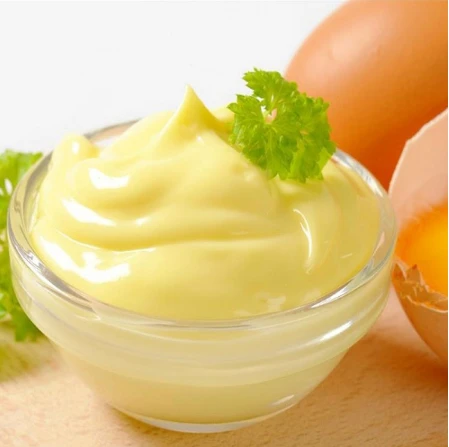
Production technology of mayonnaise
Mayonnaise production equipment is the vacuum emulsifying machine equipment on the market at present. With the development of emulsifying equipment machinery industry technology, some new equipment came into being.
JPS mayonnaise emulsification production system of Wuxi Jiangke Automation Technology Co., Ltd., from raw material receiving to conveying to filling. Work closely with each customer at every stage, from creation and design to use.
Receiving and processing raw materials
The raw material receiving technology can process the ingredients of mayonnaise production, including liquid and mayonnaise. The control system connected to the automatic weighing equipment controls that each component can be accurately weighed and stored in good conditions.
High shear batch mixer
Homogeneous emulsification is the key stage of mayonnaise production. JPS has developed temperature controllable mixing technology, which can generate stable and highly uniform lotion. The multi-functional one pot mixer has a high shear device, which can produce very small oil droplet size, avoid trapping micro bubbles in the product, and prevent flocculation and sedimentation. The mixer uses vacuum technology to introduce ingredients below the liquid surface. This results in instant emulsification, avoids caking and "fish eyes", and reduces air mixing and foaming.
CIP and automation
The sanitary system is designed to ensure the complete discharge of inter batch mixers, thus reducing waste, greatly reducing product loss and accelerating cleaning. The sanitary mixer adopts CIP configuration, which can achieve high-quality mixing and shorter processing time.
process automation
The system is a key feature of hygiene, sanitary equipment design and automation in many key processes. CIP technology has been developed for equipment and technology to help ensure effective automatic cleaning and rapid product conversion. The design can prevent the product from leaking into the cleaning line, thus reducing the possibility of contamination or product leftover. The operation uses less water and detergent, saving resource use and cost. For some plant configurations, it may not be necessary to stop the production line even if some equipment is in its CIP cycle.
Choosing a good control and automation system for any processing plant can significantly improve operational efficiency, reduce the use of raw materials and resources, and ensure reliable and consistent processing. Each plant will have different automation requirements, ranging from basic process control systems to integrated enterprise network infrastructure with recipe creation and management modules. Wuxi Jiangke's JPS emulsification system is a system tailored for the monitoring and control of key process parameters in the mayonnaise production process, while reducing the need for manual supervision and intervention.


