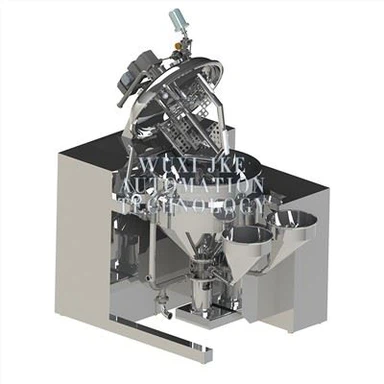


Special emulsifying machine for pastry sauce
Jul 25, 2026
Sweet orange pastry sauce is a baked sandwich sauce mainly made of concentrated orange juice, white granulated sugar, denatured starch, pectin, vegetable oil and citric acid. It is mainly used for cake interlayer, bread filling, pastry surface dressing, and dessert decoration. It belongs to an oil in water system with high water content, strong fruit acid, starch easy to age, and essence easy to volatilize. The open processing of ordinary mixing pots is prone to problems such as sinking and layering of fruit pulp, water separation from the sauce, excessive internal bubbles, loss of fruit aroma, and clumping of sand after low-temperature storage. Baking vacuum emulsifier creates a one-stop industrial production solution for sweet orange pastry sauce, achieving oil and water separation, fine and transparent paste, significantly extending shelf life at room temperature and refrigeration, and adapting to standardized mass production in baking factories.
The conventional raw material ratio for sweet orange pastry sauce is concentrated sweet orange juice 35% to 55%, white sugar 20% to 32%, modified starch 3% to 7%, vegetable oil 4% to 9%, pectin and emulsifier 0.4% to 1.8%, and trace amounts of fruit acid; The product comes with five main characteristics: corrosion of the fruit acid tank, high density of fruit pulp that is prone to settling, starch that is prone to clumping when heated, open mixing and air intake that produces bubbles, and high temperature fruit aroma that is prone to volatilization. These are common pain points in the production of old-fashioned equipment:
1. Water and oil separated from the upper part of the sauce, resulting in the appearance of the finished product being unqualified;
2. Uneven dispersion of starch forms powdery particles, and the sauce has a rough and slag like texture;
3. Open stirring mixed with a large amount of air, the sauce is covered with bubbles, and the storage oxidizes, discolors, and the flavor becomes lighter;
4. The local temperature control is too high, the natural essence of sweet orange volatilizes when heated, and the finished fruit fragrance is weak;
5. The manual control parameters are not uniform, and there are significant differences in the consistency and suspension effect of each pot, making it impossible to standardize mass production.
Case Study of Malaysian Baking Manufacturer Coming to the Factory for Actual Testing (Commercial Sweet Orange Pastry Recipe)
The customer's main business is a chain baking factory. The sweet orange sauce produced by the original open boiling equipment only separates oil, water, and surface oil after 2 days of storage. The fruit aroma is severely damaged and cannot be exceeded by the supplier. Customer requirements: The whole pot should not be layered, there should be no small bubbles, and the fruit aroma retention rate should be high. The refrigerated shelf life should be ≥ 45 days. Using JPS-5L testing machine to simulate the industrial full process trial production, the specific process steps are as follows:

1. Equipment preprocessing and overall inspection
Before the test, CIP online cleaning and disinfection and sterilization were used for JPS equipment tank, homogenizing head and pipeline, and there was no residual powder and fruit chips on the inner wall, which met the food hygiene standards; Verify the overall system: Vacuum stability range of -0.08~-0.1MPa, homogenization head adjustable by frequency conversion from 0 to 6000r/min, 360 ° bi-directional scraping without any mixing dead corners; The jacket temperature control system has a temperature control accuracy of ± 1 ℃, and can be used for segmented temperature rise gelatinization and low-temperature fragrance locking.
2. Accurate weighing of raw material pretreatment
Low temperature static filtration of concentrated orange juice to remove impurities; Crush and clump starch, pectin, and white sugar powder; The oil melts at room temperature, and the fruit acid and sweet orange essence are stored away from light; Accurately mix and feed according to the customer's mass production formula, strictly control the amount of starch and pectin added, and avoid imbalance in the ratio that affects suspension stability.
3. Pre mixing of water phase vacuum suction material
The laboratory model tank integrates pre mixing function, and the industrial production line is equipped with independent water oil pre mixing tanks; In a closed environment, concentrated orange juice, white sugar, pectin, emulsifier, citric acid and other aqueous raw materials are sucked in through vacuum negative pressure. Low speed stirring is turned on at 30-50rpm, and stirred for 5-7 minutes. The dry powder is fully dissolved without clumping, forming a uniform base material liquid. The entire process is sealed and isolated from air.
4. Negative pressure vacuum refueling homogenization
Close the tank mouth, vacuum and stabilize it to -0.09MPa, maintain the pressure throughout, isolate the air, and prevent the oxidation and volatilization of essence; Adjust the homogenization speed to 3000-3800r/min, and vacuum suction vegetable oil at a constant speed. The oil is gradually dispersed by high shear and uniformly fused into the juice water phase, initially constructing a stable emulsion base to avoid oil-water separation from the source.
5. Heating gelatinization+high shear refinement and defoaming
Maintain a vacuum sealed state, slowly raise the temperature of the jacket to 82-85 ℃ and gelatinize at a constant temperature for 3-5 minutes. Use a scraper blade to continuously clean the tank wall to prevent starch from sticking to the wall due to heat and burning; High shear refines starch particles, fully hydrates pectin, and dynamically defoams under vacuum synchronization, with a defoaming rate of ≥ 99.7%, eliminating fine bubbles generated during boiling.
6. Low temperature control and maturation stable system
After gelatinization is complete, switch to jacket water cooling and steadily cool down to 24-28 ℃. Stir at low speed for 3-5 minutes to mature, allowing pectin, starch, and oil to form a stable network structure, firmly supporting orange granules and inhibiting starch low-temperature aging and water separation.
7. Vacuum breaking discharge+finished product testing
Slowly release the vacuum and restore normal pressure, then open the discharge valve to discharge the material. Customer on-site inspection: The finished product has a uniform orange yellow color, and the paste is smooth without powder residue or visible bubbles; Rich and natural fruit flavor, no odor of essence volatilization; After 45 days of refrigeration and static testing, there was no water discharge or stratification. The centrifugal acceleration test showed stable emulsification, fully meeting the supply standards of supermarkets.
On site evaluation by the customer in charge: The sample effect far exceeded expectations. The three major advantages of the Baking JPS vacuum emulsifier, including vacuum fragrance locking, high shear stability system, and full scraping wall anti sticking pot, completely solved the three major production problems of oil and water separation, fruit aroma loss, and rough taste; The PLC touch screen of the equipment can store multiple formulas, with one click switching between original sweet orange and compound orange sauce. It has a high degree of automation, and technicians provide full process guidance to quickly master standardized production processes and determine subsequent procurement plans for mass-produced models.
Industrial Sweet Orange Pastry Standard Three Step Production Process
The entire production line consists of a water oil phase pretreatment tank, a JPS vacuum homogenization emulsification host, and a finished product temporary storage tank
1. Pre treatment and dissolution of water oil phase (independent pre mixing tank): Orange juice, sugar, and colloids are pre dissolved at low temperature in the water phase tank; Oil and fat, as well as oil soluble auxiliary materials, are mixed in an oil phase tank with temperature control and wall scraping stirring. The raw materials are completely dissolved without clumping.
2. Vacuum high shear homogenization gelatinization (emulsification host): Pre treated liquid is vacuum fed into a tank, and the gelatinization, homogenization emulsification, and synchronous vacuum defoaming are controlled in stages under negative pressure environment.
3. Cooling and maturation stabilization+closed discharge: Low temperature maturation stabilizes the suspension system of sauce, breaks the vacuum and discharges for filling.
Choose the five core advantages of Baking Technology
▶ Deeply plough the technology of fruit filling sauce to solve the four major pain points of sweet orange jam oil separation, fruit acid corrosion, essence volatilization and starch water separation;
▶ Vacuum locking, high shear, and segmented temperature control are integrated to accurately match the production characteristics of acidic fruit flavored sauce;
▶ Sanitary acid resistant tank with CIP cleaning design, easy maintenance and low material loss;
▶ One stop support: formula optimization, process debugging, on-site installation, and employee practical training;
▶ Full specification models available: 5L laboratory sampling to 1300L large-scale production, supporting automated whole line customization.
Full process supporting services
1. Customize equipment selection and process plans based on customer production capacity, formula, and raw material characteristics;
2. Pre treatment+emulsification host+filling line layout design;
3. Customers come to the factory for free sample trial production to verify the effectiveness of the finished product on site;
4. On site installation and debugging of equipment, and practical teaching for workers;
5. Long term after-sales maintenance and guidance on formula upgrade processes.
FAQ Frequently Asked Questions
What is the effect of vacuum environment on the production of sweet orange sauce?
Answer: The vacuum is closed to isolate the air. On the one hand, it locks the natural essence of sweet orange and reduces the loss of high-temperature volatilization; On the other hand, it prevents air bubbles and delays the oxidation and deterioration of the sauce. At the same time, negative pressure assists in the hydration of pectin, improving the suspension ability of fruit particles.
2. Can we completely solve the problems of orange grain sinking and sauce dehydration?
Answer: By relying on high shear refinement of colloids and vacuum construction of a stable emulsification system, combined with precise temperature control to suppress starch aging, the finished product can achieve long-term storage of fruit particles suspended without water separation.
Can the equipment produce multiple flavors of fruit sauce?
Answer: Support, PLC stores multiple sets of formulas, and can switch production of fruit fillings such as oranges, strawberries, and mangoes with just one click.
How long does it take to produce a single pot?
Answer: Conventional commercial formula single pot takes 18-28 minutes, and the production efficiency far exceeds traditional open boiling equipment.
5. Will acidic orange juice corrode equipment?
Answer: The tank body is made of 316L acid resistant stainless steel material, which can withstand the weak acid corrosion of jam for a long time and complies with food safety production.
6. Does it support non-standard automation customization?
Answer: A fully automatic feeding and integrated production line can be customized according to the factory conditions and daily production capacity.