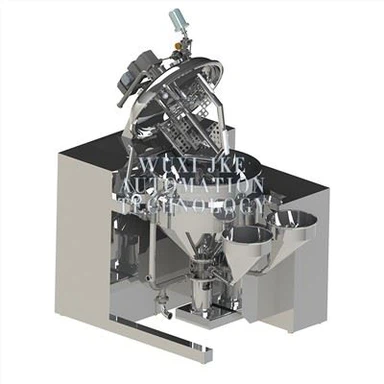


Is the working principle of the emulsifier complex
Sep 21, 2024
Emulsifier has a wide range of applications in many industries, such as food, chemical, pharmaceutical, etc. Its main function is to mix two or more immiscible liquids together to form a uniform and stable lotion. Although the emulsifier appears to be a relatively specialized device, its working principle is actually not complicated.

1, Basic concepts of emulsification
Before understanding the working principle of an emulsifier, let's first understand the basic concepts of emulsification. Emulsification refers to mixing two immiscible liquids, such as oil and water, by specific methods to form a uniform and stable mixture, namely lotion. In lotion, one liquid is dispersed in another liquid in the form of tiny droplets. These tiny droplets typically have diameters ranging from a few micrometers to tens of micrometers, and due to surface tension, they tend to cluster together. To prevent droplet aggregation, a substance called emulsifier needs to be added. Emulsifiers can reduce the surface tension between liquids, allowing droplets to disperse stably in another liquid.
2, The main components of an emulsifier
Emulsifier usually consists of the following main parts:
1. Mixing system: The mixing system is the core part of the emulsifier, mainly composed of a mixing shaft, mixing blades, and a driving motor. The stirring shaft drives the stirring blades to rotate through the driving motor, thereby generating shear force and turbulence, mixing two immiscible liquids together. The shape and design of the stirring blade play a crucial role in the emulsification effect. Different application scenarios require mixing blades of different shapes and designs to achieve better emulsification effects.
2. Homogenization system: Homogenization system is another important component of emulsifier, mainly composed of homogenization valve, homogenization head and high-pressure pump. Homogenization valve and homogenization head are key components that generate high shear forces. The high-pressure pump pressurizes the liquid and sends it into the homogenization valve and head. Under high pressure, the liquid passes through narrow gaps, generating extremely high shear forces and turbulence, further refining and uniformly dispersing the droplets.
3. Heating and cooling system: In some emulsification processes, it is necessary to heat or cool the liquid. Heating and cooling systems typically consist of heating elements, cooling elements, and temperature control systems. The temperature control system can accurately control the temperature of the liquid, ensuring that the emulsification process is carried out at an appropriate temperature.
4. Control system: The control system is the brain of the emulsifier, mainly composed of a control panel, sensors, and controllers. The control panel is used to set and adjust the working parameters of the emulsifier, such as mixing speed, homogenization pressure, temperature, etc. Sensors are used to monitor the working status of emulsifiers, such as temperature, pressure, flow rate, etc. The controller automatically adjusts the working parameters of the emulsifier based on the feedback signal from the sensor, ensuring the stability and reliability of the emulsification process.
3, Working principle of emulsifier
The working principle of the emulsion machine is mainly to mix two immiscible liquids together to form a uniform and stable lotion through the synergistic action of the mixing system and the homogenizing system. The specific work process is as follows:
1. Mixing process
Firstly, add the two liquids that need to be emulsified separately into the containers of the emulsifier.
Start the drive motor to rotate the mixing shaft and mixing blades. The rotation of the stirring blade generates shear force and turbulence, which initially mixes the two liquids together.
The shape and design of the stirring blade determine the strength and direction of shear force and turbulence. Mixing blades of different shapes and designs are suitable for different emulsification tasks. For example, for low viscosity liquids, turbine type stirring blades can be used to generate strong shear forces and turbulence; For high viscosity liquids, anchor type stirring blades can be used to generate a larger stirring range and lower shear forces.
During the stirring process, emulsifiers are added to the liquid. Emulsifiers can reduce the surface tension between liquids, allowing droplets to disperse stably in another liquid.
2. Homogenization process
The liquid that has been preliminarily stirred and mixed is sent into the homogenization system. The high-pressure pump pressurizes the liquid and sends it to the homogenization valve and homogenization head.
Under high pressure, liquids pass through narrow gaps, generating extremely high shear forces and turbulence. These high shear forces and turbulence can further refine and uniformly disperse droplets.
The design and parameters of homogenization valves and homogenization heads play a crucial role in the homogenization effect. Different application scenarios require homogenization valves and heads with different designs and parameters to achieve better homogenization effects.
After homogenization treatment, the liquid droplets have smaller diameters, more uniform distribution, and higher stability.
3. Heating and cooling process
In some emulsification processes, it is necessary to heat or cool the liquid. For example, in the food industry, some lotion need to be emulsified at a specific temperature to ensure product quality and stability.
The heating and cooling system heats or cools liquids through heating or cooling elements. The temperature control system can accurately control the temperature of the liquid, ensuring that the emulsification process is carried out at the appropriate temperature.
The control of temperature has a significant impact on the emulsification effect and product quality. Excessive or insufficient temperature can lead to poor emulsification effect or decreased product quality.
4. Control process
The control system monitors the working status of the emulsifier through sensors, such as temperature, pressure, flow rate, etc.
Based on the feedback signal from the sensor, the controller automatically adjusts the working parameters of the emulsifier, such as stirring speed, homogenization pressure, temperature, etc.
The control system can ensure the stability and reliability of the emulsification process, improve production efficiency and product quality.
4, The advantages of the working principle of the emulsifier
The working principle of an emulsifier has the following advantages:
1. Efficiency: The emulsifying machine can mix two immiscible liquids together in a short time to form a uniform and stable lotion. Compared to traditional mixing methods, emulsifiers have higher efficiency and can greatly shorten production cycles.
2. Stability: Through the synergistic effect of the stirring system and homogenization system, the emulsifier can refine the droplets to a few micrometers to tens of micrometers and evenly disperse them in another liquid. This fine droplet size and uniform distribution make the lotion more stable and not easy to delaminate and precipitate.
3. Controllability: The working parameters of the emulsifier, such as stirring speed, homogenization pressure, temperature, etc., can be precisely adjusted through the control system. This enables users to flexibly adjust the working parameters of the emulsifier according to different emulsification tasks and product requirements, in order to achieve better emulsification effects.
4. Adaptability: The emulsifier is suitable for various liquids and emulsification tasks. Whether it is low viscosity or high viscosity liquids, in the food, chemical, or pharmaceutical industries, emulsifiers can achieve good emulsification effects.
In summary, the working principle of the emulsifier is not complicated. It mainly mixes two immiscible liquids together to form a uniform and stable lotion through the synergistic effect of the mixing system and the homogenizing system. Although the emulsifier may seem like a relatively professional device, as long as you understand its working principle, you can better use and maintain it, providing strong support for production and scientific research.